Purchasing a solution is the last thing a buyer does

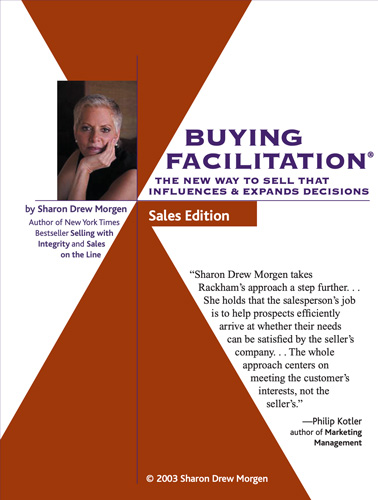
buying-facilitation-not-consultative-salesSomeone who has read one of my early books told me she thought that Buying Facilitation® was a type of consultative sales model. It’s far from it. Here is why.

Traditional Sales, spearheaded by Dale Carnegie in his book How to Win Friends and Influence People, published in 1937, is about the product sale. How to position it, how to make its features, functions, and benefits relevant, and how to discuss it so buyers will recognize a need.

Consultative Sales, spearheaded by Linda Richardson in the 80s, added the customer to the mix. What are their needs? What sort of a solution will be relevant? How can we gather the right data so we can ensure that our product/solution can fit with the needs and be positioned in a way to ensure the prospect understands the fit?

Read the rest of this entry »

  • Digg
  • Facebook
  • Twitter
  • LinkedIn
  • Mixx
  • MySpace
  • Delicious
  • StumbleUpon
  • Google Reader
  • Share/Bookmark

Be The GPS For Your Buyer

gpsBuyers have two identifiable responsibilities:

  • maneuver through their internal, behind-the-scenes buy-in issues to ensure a trouble-free change process, and
  • choose a solution that will address their stakeholder’s criteria for systems excellence while maintaining the integrity of the system.

Sales addresses one of these jobs, but not the other. In fact, we’ve never been taught the skills to help with the off-line issues buyers address: as per the explanations and skills offered in my new book Dirty Little Secrets, helping buyers maneuver through their off-line buy-in issues requires a wholly different skill set.

Read the rest of this entry »

  • Digg
  • Facebook
  • Twitter
  • LinkedIn
  • Mixx
  • MySpace
  • Delicious
  • StumbleUpon
  • Google Reader
  • Share/Bookmark

“Dirty Little Secrets” launches tomorrow: 3 more secrets unveiled

more-secretsYesterday I gave you 3 ’secrets’ from the Conclusion of my new book Dirty Little Secrets: why buyers can’t buy and sellers can’t sell and what you can do about it.

An answers for those of you who have asked how this book differs from some of my other books, and then I’ll give you 3 more ’secrets.’

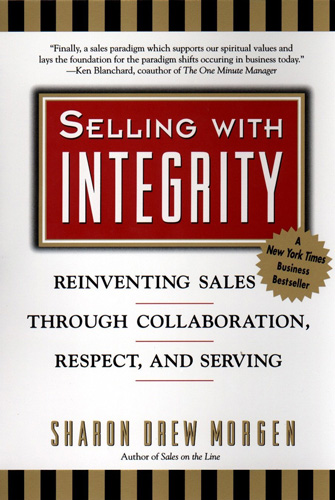
This book is very very different from Sales on the Line, Selling with Integrity and Buying Facilitation®. While those books talk about the buying decision process as being separate from the sales process and introduce some new skills, none of my previous books delve into exactly, EXACTLY what happens behind the scenes. I have thoroughly explained

Read the rest of this entry »

  • Digg
  • Facebook
  • Twitter
  • LinkedIn
  • Mixx
  • MySpace
  • Delicious
  • StumbleUpon
  • Google Reader
  • Share/Bookmark

Cold Calling Works – and it’s fun!

cold phoneI’m here to tell you that cold calling can be one of the most effective ways to meet new prospects. And a whole lotta fun.

I know, I know. Most sellers eschew cold calling, preferring instead to network, get referrals, golf, meet face-to-face.

Did you ever ask yourself why?

We can think historically: Dale Carnegie, in How to win friends and influence people published in 1937, told us to meet prospects in person (and his choices then were….. were what?). We can think about trying to ‘get through’ the gatekeeper. We can think about trying to gather information or pitch product with no ability to understand or share personal expressions on a phone.

Read the rest of this entry »

  • Digg
  • Facebook
  • Twitter
  • LinkedIn
  • Mixx
  • MySpace
  • Delicious
  • StumbleUpon
  • Google Reader
  • Share/Bookmark

Facilitating a New Customer Experience

UserExperiencesWhat differentiates us from our competition? Not a lot. Let’s look at that in detail.

  1. Product similarity: Our products are pretty similar at this point. While we can recite chapter, line, and verse how our offering differs, the client hears similar stories from all vendors. They just want to get a business problem resolved in a way that causes the least disruption to their system.
  2. Customer Service: We’ve all been taught to ‘make nice’ and give customers ‘good’ service. What that means is idiosyncratic to the situation and the company. And we certainly don’t know how that translates to the customer. I recently cancelled my phone service with Time Warner and went back to ATT, scheduling an appointment for a date after I’d returned from Europe. When I was out of the country, it seems they decided to give me ‘better service’ and come out to turn on new service 8 days before the scheduled appointment (when I was out of the country) and they turned off my phone service, leaving me without a business phone until we could straighten out the mess days later – which I had to manage from Scotland. Often, the definition of  ‘customer service’ is defined to meet the capability of the seller – not the true need of the buyer.
  3. Face-to-face meetings: Sales makes the  faulty assumption that if the buyer has a ‘relationship’ with the seller, or at least ‘likes’ the seller, that there is a greater propensity for a sale. Obviously that is flawed, or we’d all close a lot more sales. Indeed, all of the competition is doing the same thing.

Read the rest of this entry »

  • Digg
  • Facebook
  • Twitter
  • LinkedIn
  • Mixx
  • MySpace
  • Delicious
  • StumbleUpon
  • Google Reader
  • Share/Bookmark

Managing Off-Line Decisions

icon_offlineWhere do our prospects go when they say, “I’ll call you back?” Most of us guess, but really, we don’t know where they go.

Where they go, in fact, is to get ahold of their colleagues and figure out how to get agreement for whatever outcomes the new solution will cause within the  buyer’s environment. We rarely think that way as sellers: we see a problem, figure out if we have the appropriate solution, and go forth, fearlessly, to match the need with the solution.

Read the rest of this entry »

  • Digg
  • Facebook
  • Twitter
  • LinkedIn
  • Mixx
  • MySpace
  • Delicious
  • StumbleUpon
  • Google Reader
  • Share/Bookmark