Who are the decision makers?

I once was told that there are three things a sales person needs to know: when will a prospect buy, who are the decision makers, and how much money will they give me.

I wonder how true this is now. Or if these are the most appropriate benchmark needs of a seller. Let’s go through each of them:

1. When will a prospect buy?

People buy only when their entire decision team figures out how to bring in something new while ensuring that the status quo (the people, policies, initiatives, partners, rules, relationships, etc.) won’t be severely affected by the new solution coming in. It’s got absolutely nothing whatsoever to do with their need – they’ve done without trying to ‘fix’ the problem this long, why do they need to hurry up and potentially risk some sort of fallout? We are the ones who want them to hurry up. We notice a ‘problem’ and we have the perfect ’solution’ of course, and think that there is obviously a need for an immediate resolution.

Read the rest of this entry »

  • Digg
  • Facebook
  • Twitter
  • LinkedIn
  • Mixx
  • MySpace
  • Delicious
  • StumbleUpon
  • Google Reader
  • Share/Bookmark

How Does Sales Make Our Job Harder?

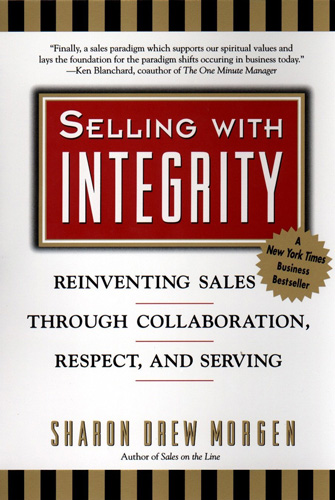
One of the ‘dirty little secrets’ in my new book is this: because the model of sales is focused on understanding needs and placing solutions, and doesn’t have the tools to help manage the behind-the-scenes issues that buyers must manage internally before they can purchase anything, we fail far more than we should. And we end up creating ways to stay in the loop when in fact, what’s going on is outside of our control.

As we approach prospects, we end up pushing against their ’system’ that is ‘relatively ok’  (or it would have changed already) and doesn’t wish to be disturbed until it is assured that anything new will not cause permanent disruption – something they must come to terms with themselves and has nothing to do with their need or our solution.

As a result, sales folks have to suffer the indignities of rejection caused by us showing up with the right solution at the wrong time, determined by the way the sales model itself is structured. To manage this rejection, and because we see an obvious match between their ‘need’ and our solution and believe it’s the right time to involve ourselves, we have developed work-arounds to ‘get in’ and get heard, get seen, get liked. We push against the system as we

Read the rest of this entry »

  • Digg
  • Facebook
  • Twitter
  • LinkedIn
  • Mixx
  • MySpace
  • Delicious
  • StumbleUpon
  • Google Reader
  • Share/Bookmark

Why Sales Are Faltering In This Economy, And What To Do About It

Unbalanced_scales

IS IT TIME TO TRULY HELP BUYERS BUY?

There are actually two major things a buyer must do prior to making a purchasing decision. Of course they must ultimately choose a supplier and a solution (that’s the role of sales). But they also must manage all of the off-line, behind-the scenes change issues that must take place internally so they can get buy-in to bring aboard something new (i.e. a solution). And this idiosyncratic, off-the-cuff buying decision activity is not addressed by the sales model – and yet it takes up 2/3 of the time it takes a buyer to do all they have to do before they buy.

We cannot be a direct part of this process. We are not there: we are outsiders, the conversations happen between colleagues, and we are not a part of the buyer’s team. Sure, we know (and learn) how to be professionals, and care, and understand. Yet the time it takes buyers to come up with their own answers – not the ones we want them to have but answers based on the idiosyncratic needs of the internal system – is the length of the sales cycle.

One of the problems we’re having selling now is not about a buyer’s need, or our solution: it’s the internal, behind-the-scenes issues buyers are having difficulty managing internally.  And these issues are now very politically motivated and economy-driven.

Because sales only manages the solution/product placement end of the buying decision, it offers us no tool kit to help buyers manage the conversations that go on off-line, between departments, with old vendors, etc. And because it focuses on the very last thing buyers do – choosing  a solution – and not the nitty-gritty issues that cause buyers to buy (or not), we are basically out of control.

Read the rest of this entry »

  • Digg
  • Facebook
  • Twitter
  • LinkedIn
  • Mixx
  • MySpace
  • Delicious
  • StumbleUpon
  • Google Reader
  • Share/Bookmark