Buying Facilitation® vs. buyer facilitation

buying-facilitation-vs-buyer-facilitationLately, I’ve noticed folks using the term buyer facilitation. While I can make a good guess that the term is a version of Buying Facilitation®, it is being used in a ’sales’ context. So maybe, the term is to be used in conjunction with Buying Facilitation®. After all, the buyer must manage both the internal decision issues and the need-related decision isuses before a purchase happens.

Here is a complete definition of Buying Facilitation®:
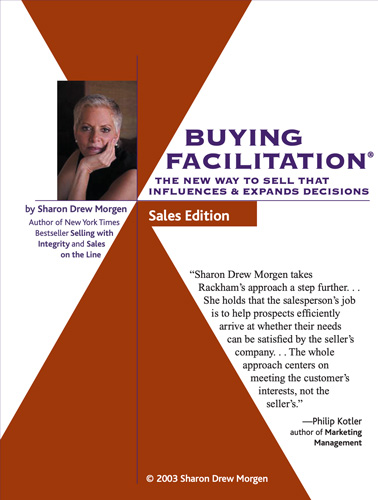
Buying Facilitation® is a decision facilitation skill that acts as an unbiased GPS tool to assist buyers in navigating through their unique, behind-the-scenes change issues to ensure they get the buy-in necessary to bring in a new solution.

I named my model Buying Facilitation® because it’s precisely what we need to be doing in addition to selling: helping buyers facilitate the internal, off-line, behind-the-scenes, personal decision process that we are not privy to. It manages that important meeting between colleagues over lunch, the fight that needs to be resolved between department heads before budgets can be used, the political issues that will get the right folks to meetings, that the right considerations and implementation concerns are on the agenda. We are indeed helping facilitate the buying decision, but it’s core is change management. It’s the stuff that often has nothing to do with need or solution. And the stuff that sales methods don’t address, yet needs to happen before buyers can go ahead with any purchase.

Read the rest of this entry »

  • Digg
  • Facebook
  • Twitter
  • LinkedIn
  • Mixx
  • MySpace
  • Delicious
  • StumbleUpon
  • Google Reader
  • Share/Bookmark

Selling with Integrity

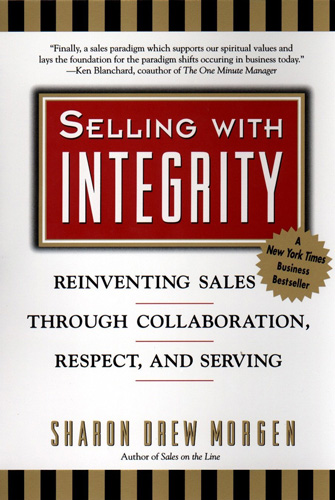
selling with integrityIn 1995 I wrote a book called Selling with Integrity: reinventing sales through collaboration, respect, and serving, published in 1997 and subsequently on the NYTimes Business Bestseller list. The book continues to sell well, being considered one of the top sales books of all time. At the time I wrote it, it took a month of hassling before my publisher agreed to me using the term ’serving’ rather than ’service.’ And, at the time, I didn’t know how to talk or write about Buying Facilitation® as clearly as I do now.

Selling with Integrity was my nascent attempt to explain the idiosyncratic way buyers buy behind-the-scenes, and our jobs as sellers to serve them by being neutral navigators, GPS systems, and decision facilitators. But I wasn’t that clear, and I ended up writing about our spiritual values and how we, as sales professionals, can actually use our positions to actually lead buyers through their own criteria and values. I actually wrote several articles with titles such as ‘The Seller as Servant-Leader.’ Indeed, an article with that title was the most requested reprint from Leadership Excellence magazine.

Read the rest of this entry »

  • Digg
  • Facebook
  • Twitter
  • LinkedIn
  • Mixx
  • MySpace
  • Delicious
  • StumbleUpon
  • Google Reader
  • Share/Bookmark

How do we sell if we don’t understand needs?

I will call you backWhen people first hear about Buying Facilitation®, they ask: ‘But if we can’t ask about needs and discuss our solution, how do we sell?’

The short answer is, you don’t. At least not when you are accustomed to. Because that’s not the first thing buyers need from you. The buyer first needs assistance navigating around their off-line decision issues. See, we actually enter our buyer’s sphere far too early in their decision cycle. And we end up attempting to gather needs, understand, and place product before a buyer really knows how to have this conversation with you.

The first thing buyers do – well  before they are ready to choose a vendor or a solution  – is to figure out what needs to happen internally for them to be assured that they can achieve excellence AND keep their organization in tact.  THEN they are ready for you to understand their need and place your solution. The sales model does not help the buyer at this initial part of their decision cycle because it’s private, unconscious, idiosyncratic, and for insiders only. But they must do it – and we needlessly wait as they do. It would like finding the house or car of your dreams before you discussed a move or a purchase with your spouse or bank.

Read the rest of this entry »

  • Digg
  • Facebook
  • Twitter
  • LinkedIn
  • Mixx
  • MySpace
  • Delicious
  • StumbleUpon
  • Google Reader
  • Share/Bookmark

Be The GPS For Your Buyer

gpsBuyers have two identifiable responsibilities:

  • maneuver through their internal, behind-the-scenes buy-in issues to ensure a trouble-free change process, and
  • choose a solution that will address their stakeholder’s criteria for systems excellence while maintaining the integrity of the system.

Sales addresses one of these jobs, but not the other. In fact, we’ve never been taught the skills to help with the off-line issues buyers address: as per the explanations and skills offered in my new book Dirty Little Secrets, helping buyers maneuver through their off-line buy-in issues requires a wholly different skill set.

Read the rest of this entry »

  • Digg
  • Facebook
  • Twitter
  • LinkedIn
  • Mixx
  • MySpace
  • Delicious
  • StumbleUpon
  • Google Reader
  • Share/Bookmark

What do Sellers Need to Understand – and When?

question-mark-clockAs a sales professional, you learn early on that your need to ‘understand’ a buyer. But what, exactly, do you need to understand?

On the sales end of the equation, you NEED to understand the prospect’s situation to make sure you are placing the appropriate solution in the right place. This same data will give you ability to fine-tune your presentation and pitch to ensure the buyer understand how your solution will fit in their environment. You also need to understand the buyer’s vision, and criteria for Excellence.

There is no way to truly understand anything else.

Read the rest of this entry »

  • Digg
  • Facebook
  • Twitter
  • LinkedIn
  • Mixx
  • MySpace
  • Delicious
  • StumbleUpon
  • Google Reader
  • Share/Bookmark

How Does Sales Make Our Job Harder?

One of the ‘dirty little secrets’ in my new book is this: because the model of sales is focused on understanding needs and placing solutions, and doesn’t have the tools to help manage the behind-the-scenes issues that buyers must manage internally before they can purchase anything, we fail far more than we should. And we end up creating ways to stay in the loop when in fact, what’s going on is outside of our control.

As we approach prospects, we end up pushing against their ’system’ that is ‘relatively ok’  (or it would have changed already) and doesn’t wish to be disturbed until it is assured that anything new will not cause permanent disruption – something they must come to terms with themselves and has nothing to do with their need or our solution.

As a result, sales folks have to suffer the indignities of rejection caused by us showing up with the right solution at the wrong time, determined by the way the sales model itself is structured. To manage this rejection, and because we see an obvious match between their ‘need’ and our solution and believe it’s the right time to involve ourselves, we have developed work-arounds to ‘get in’ and get heard, get seen, get liked. We push against the system as we

Read the rest of this entry »

  • Digg
  • Facebook
  • Twitter
  • LinkedIn
  • Mixx
  • MySpace
  • Delicious
  • StumbleUpon
  • Google Reader
  • Share/Bookmark