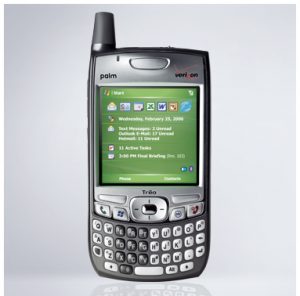
Make the Phone your Best Friend

Do you believe that to close a sale you must ‘get in front of prospects?’  Why? Really. Have you ever asked yourself why? Do you tell yourself that you MUST have that eye contact? That ‘face-to-face’ juice? Do you tell yourself that if you’re not in the field, you’re not selling?

In 1937, Dale Carnegie advocated it. What else are you using from a 1937 playbook?

Untold billions of dollars have been misspent following this industry-wide belief: planes, hotels, time. And? The industry still has a 7% average close rate.

Here is a rule: Don’t use your body as a prospecting tool.

Here is a secret: your sterling personality, your great outfit, your Rolex watch and Prada shoes don’t close an account. Nor does your great insight or knowledge of the buyer, their need, your industry, or your solution. Nor does that great rapport you create over lunch. Otherwise, you would be closing a lot more sales. Amazing how much push-back I get from an industry with such a low success rate.

Read the rest of this entry »

  • Digg
  • Facebook
  • Twitter
  • LinkedIn
  • Mixx
  • MySpace
  • Delicious
  • StumbleUpon
  • Google Reader
  • Share/Bookmark

Buying Decisions: What Happens Behind-The-Scenes

behind the scenesFor some reason, it’s very difficult for sales people to think beyond ‘need’ and ’solution:’  We tend to think that because the buyer’s need matches our solution, and because we’re professionals who ‘care,’  the only thing buyers need to do is choose our solution.

But if it were that easy, buying decisions would get made more often in our favor. We certainly would not lose as many sales as we do. The problem is that the buying decision is so, so much more complex than we can imagine as we stand on the outside looking in.

Sales mysteriously treats an Identified Problem (my word for ‘need’) as if it were an isolated event. But it’s not. There are ramifications to any change, and the ramifications are ones only buyers can see from the inside and we will never be privy to.

Read the rest of this entry »

  • Digg
  • Facebook
  • Twitter
  • LinkedIn
  • Mixx
  • MySpace
  • Delicious
  • StumbleUpon
  • Google Reader
  • Share/Bookmark

Price Objections Aren’t Price Objections

money bag

Recently, a CEO of a smallish company – a man familiar with my books - called me to do some work. Given the difficult market, he wanted to use Buying Facilitation® to differentiate from his competition, and have his existing customers buy more product.

As with everyone, I led him down the buying decision funnel and he figured out 1. how he needed to go about getting buy-in from his managers; 2. how he’d know before we started that he’d have a good chance of getting the results he desired; 3. how he’d recognize the value of any money expenditure.

Through the questions, he realized the managers who would have to be involved with the decisions to bring me in, what he and I would need to do prior to any training to give him the best shot at success, and what he’d walk away with when we were done.

Read the rest of this entry »

  • Digg
  • Facebook
  • Twitter
  • LinkedIn
  • Mixx
  • MySpace
  • Delicious
  • StumbleUpon
  • Google Reader
  • Share/Bookmark

Sales As A Form Of Change Management

sales-change-managementAs sellers, we forget that when buyers make a purchasing decision, they are bringing our solution into their environment. And, trust me on this, their environment is not sitting and waiting around for us to show up.

The Identified Problem – need, or pain, as some of you may call it – has been there for some time, and the culture has already developed work-arounds for it. So if they have needed an accounting package, someone is doing that while waiting for the new software. If they need a leadership training, the folks are doing ‘leading’ in the best way they know how until the training.

Read the rest of this entry »

  • Digg
  • Facebook
  • Twitter
  • LinkedIn
  • Mixx
  • MySpace
  • Delicious
  • StumbleUpon
  • Google Reader
  • Share/Bookmark

What’s Behind A Buying Decision?

sdm with collar

Buyers live in a system. It includes people, policies, relationships, company or family politics, personality issues, initiatives, historic vendor relationships, personal biases, fears. And any Identified Problem, or need, that our product can resolve, sits inside that system. And make no mistake: this Identified Problem sits comfortably in the buyer’s culture (their ’system’).

When they go to resolve this Identified Problem, they are stuck with the work-arounds that the system created for it that not only provide some sort of solution, but also creates sticky tentacles that become firmly rooted in the buyer’s environment. Until or unless these latch on to something else, or get untangled in a way that everyone approves of, no purchase can take place. Managing this creates the delays in buying decisions.

Read the rest of this entry »

  • Digg
  • Facebook
  • Twitter
  • LinkedIn
  • Mixx
  • MySpace
  • Delicious
  • StumbleUpon
  • Google Reader
  • Share/Bookmark

Sales Treats A Need As If It Were An Isolated Event

buyingfacilitationWe all know that sales is a failed model; we’re good sellers and offer great customer service, our products are good, and our buyers have a need that we can fulfill. But we fail to close at least 90% of the time.

If it’s not us, not our product, and the need is obvious, what’s going on? Why don’t buyers know they’re supposed to buy?

The problem is the sales model. It’s broken. It treats the ‘need’ or the Identified Problem as if it were an isolated event, instead of recognizing that an Identified Problem is just one piece of a larger problem, and sits in a tangle of ’stuff’ that holds it in place in the buyer’s environment. What sales can’t manage is the mysterious route the buyer must go through to untangle the internal issues before they can make a decision to buy.

Read the rest of this entry »

  • Digg
  • Facebook
  • Twitter
  • LinkedIn
  • Mixx
  • MySpace
  • Delicious
  • StumbleUpon
  • Google Reader
  • Share/Bookmark