Coaching does not have to be like sales

Success coachingIn my opinion the field of coaching behaves similarly to the field of sales: gather data about a problem, ask responsible, caring questions, and then provide a solution. Similar to sales, coaches like to say that they really do care, that they don’t give answers, that they only provide data on relevant solutions. And yet, to me the models are quite similar, if not identical.

Coaches lose at least 50% of their clients after the first round of coaching. Just like sellers, coaches blame the clients.Where do the clients go? They weren’t ready to change/buy; they maintained their status quo; they used a competitor.

But that’s not the problem. The problem is that the coaching model (and here I’m going to buck the conventional wisdom) merely works within the bias of both coach and client, in the same way that placing a solution and asking information-gathering questions works within the bias of the seller’s bias and ability to fix a problem with their solution.

Read the rest of this entry »

  • Digg
  • Facebook
  • Twitter
  • LinkedIn
  • Mixx
  • MySpace
  • Delicious
  • StumbleUpon
  • Google Reader
  • Share/Bookmark

How Does Sales Make Our Job Harder?

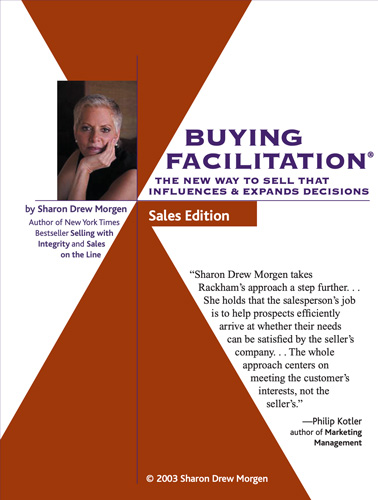
One of the ‘dirty little secrets’ in my new book is this: because the model of sales is focused on understanding needs and placing solutions, and doesn’t have the tools to help manage the behind-the-scenes issues that buyers must manage internally before they can purchase anything, we fail far more than we should. And we end up creating ways to stay in the loop when in fact, what’s going on is outside of our control.

As we approach prospects, we end up pushing against their ’system’ that is ‘relatively ok’  (or it would have changed already) and doesn’t wish to be disturbed until it is assured that anything new will not cause permanent disruption – something they must come to terms with themselves and has nothing to do with their need or our solution.

As a result, sales folks have to suffer the indignities of rejection caused by us showing up with the right solution at the wrong time, determined by the way the sales model itself is structured. To manage this rejection, and because we see an obvious match between their ‘need’ and our solution and believe it’s the right time to involve ourselves, we have developed work-arounds to ‘get in’ and get heard, get seen, get liked. We push against the system as we

Read the rest of this entry »

  • Digg
  • Facebook
  • Twitter
  • LinkedIn
  • Mixx
  • MySpace
  • Delicious
  • StumbleUpon
  • Google Reader
  • Share/Bookmark